

Latency is the product
A tile lives for seconds. In that window quotes must refresh, your tap must land, and settlement must finalize — all before the price line moves on. That constraint dictated the entire stack: Mesha runs on a high-throughput EVM chain where blocks arrive in milliseconds, throughput reaches tens of thousands of transactions per second, and gas is cheap enough that even a $0.1 tap makes economic sense. Full EVM compatibility isn’t an accident either — it means the contracts can be read, verified, and poked at with the standard tooling every Solidity developer already has.The life of a tap
From your finger to final settlement, four independent parties touch the trade:1
Makers quote
Market makers stream competing multipliers into every tile, updating many times per second.
2
You commit
Your tap submits the trade straight from your self-custody smart account.
3
Contracts escrow
Mesha’s on-chain contracts record the position and lock both sides’ value — your stake and the maker’s payout.
4
The oracle rules
An independent price feed determines whether your tile was actually touched in time. The contracts settle accordingly.
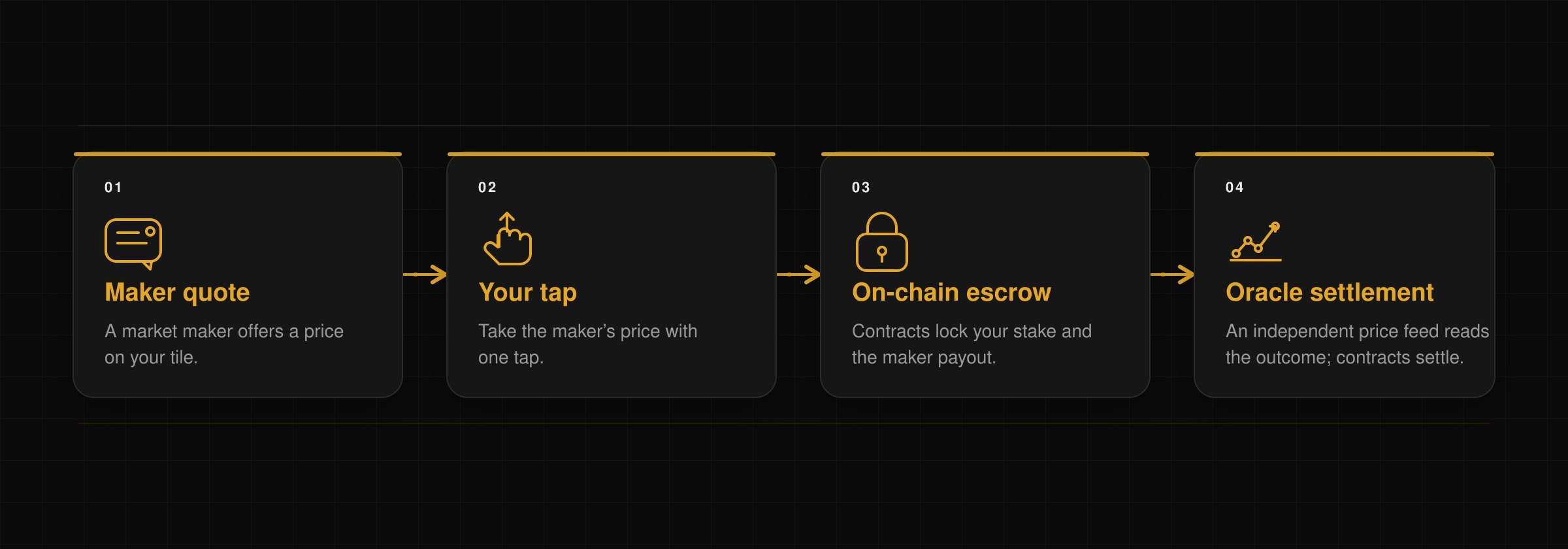
Trade flow: maker quote → your tap → on-chain escrow → oracle settlement
Nobody gets to decide the outcome
That last step is the important one. Win or lose is never a judgment call — it’s read off a dedicated oracle feed built on trusted external market data. The feed:- establishes the reference price of the underlying market
- answers one objective question: did price enter your tile before the line passed?
- sits outside the control of both Mesha and every quoting firm